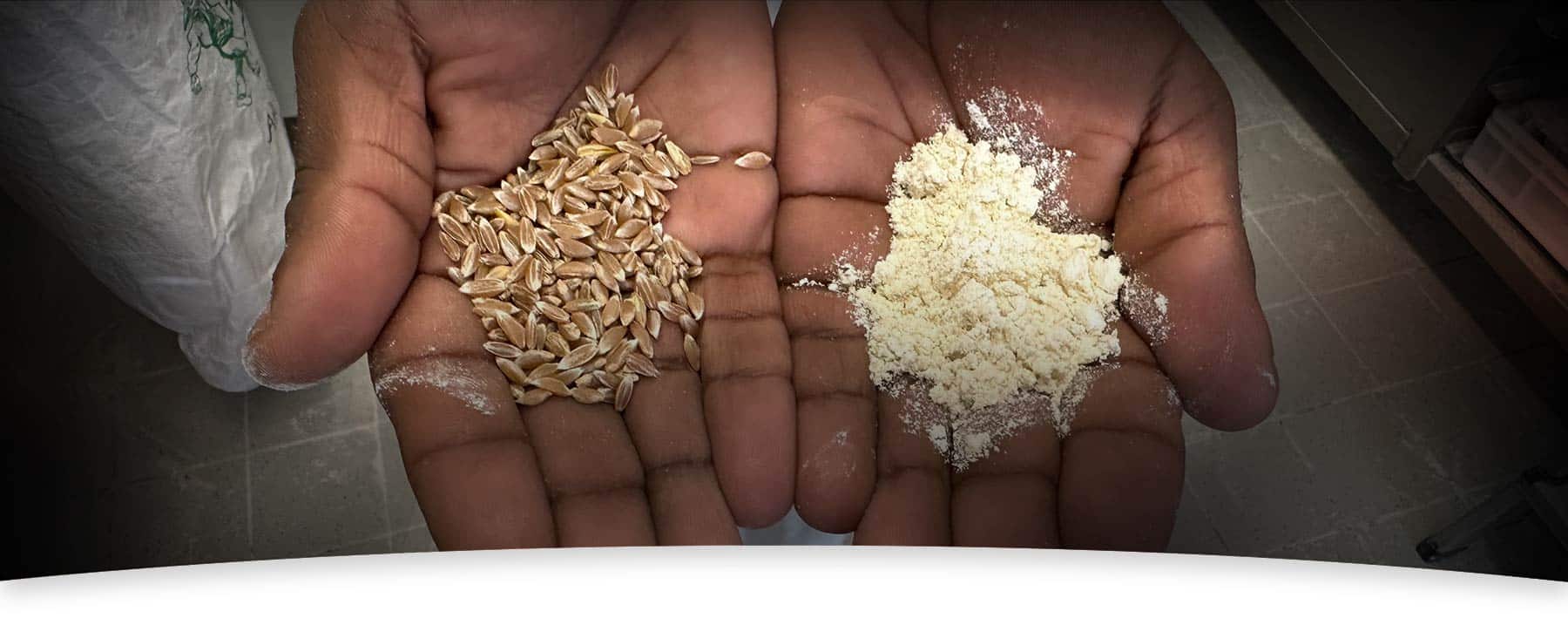
FROM EMMER FLOUR TO EMMER BREAD
Emmer
Emmer (Triticum dicoccum) is also known as two-grain wheat, because each spikelet contains two small grains. The plant is sturdy and tall, sometimes reaching two metres in height, which makes it vulnerable to bad weather conditions. The yield is low. During ripening, the plant can take on all kinds of colours, including white, red, blue, purple or black.
As with einkorn, husking the grain is difficult because it is fused with the husk. This, combined with the low yield, makes emmer an expensive grain.
Wild emmer seeds were collected and eaten by hunter-gatherers as early as 19,000 years ago. Domesticated emmer was cultivated in Egypt and elsewhere from 8000 BC onwards. Roughly 2000-3000 years ago, emmer was already being cultivated in the Netherlands on so-called raatakkers (grid fields).
Emmer is rich in magnesium, iron, zinc, carotenoids and essential fatty acids.

LIKE ALL MY BREADS, THEY ARE SOURDOUGH BREADS
EMMER BREAD IN MY SHOPS AND WEBSHOP:
This is the French word for emmer.
My emmer bread is a wholemeal bread from freshly milled emmer flour.

Olympiaplein 119
1077 CW Amsterdam
Tel.: 020-6724211
Open from Monday to Saturday:
7 am to 7 pm.
Gijsbr. van Amstelstraat 131
1214 AW Hilversum
Tel.: 035-6210602
Open from Monday to Saturday:
7 am to 7 pm.
Amsterdamseweg 189
1182 GV Amstelveen
Tel.: 020-8232412
Open from Monday to Saturday:
7.30 am to 7pm.